Friday, March 8, 2013

Which is easier: Declaring Forgiveness or Healing?

Our context for this question today comes from those who are disgruntled with Jesus.  Jesus has spoken with authority regarding forgiveness and healing and he has been accused of blasphemy as a result.  I wonder why we like to revel in bondage of any kind: whether it be sin, punishment, disease, or consequences?  The word that leaps to mind is control.  We enjoy any sense of mastery or control; it is so much easier to hold resentment, fear, and punishment than it is to release and let go, to grant freedom to another person.


I am often reminded that a primary charge for disciples "on The Way" is to be reconcilers: that is, we have been given the ministry of reconciliation.  Yet, how often in church do we do just the opposite?  We bind people with heavy burdens while we ourselves enjoy the lighter yoke.  We withhold forgiveness and block reconciliation with our resentment and anger.  We forgo the ministry of reconciliation for a dogmatic ministry aimed at stunting/controlling growth rather than cultivating both growth and freedom .

Our question today asks which one is easier?  I don't know that either of these paths is easy.  Forgiveness takes work and so does healing.  The two are inextricably intertwined.  We may want to separate them, but that is not really feasible.  I think Jesus is pointing the crowd towards this realization.  Neither option is easy; the story says "when He saw the faith of the men..." that is when Jesus stops and begins his address, and the forgiveness and healing follow.  
It obviously took quite a bit of boldness and effort to heave the sick man onto the roof and lower him inside.  When asked which character fits me best in this story, I have to confess that I would likely be standing in the back of the crowd, peeking over and watching.  Boldness does not come naturally to me.  I can get there, especially when convictions run high.  But I am not sure honestly I would have had it in this situation.
I don't want to just stand by with my life or be a crowd onlooker at all times.  I need forgiveness and healing of my reluctance, my fears, my want to observe and stick a toe in the water before jumping in.  Maybe I need to hit the restart button more often and grant myself forgiveness so that I may find the healing I need!

How might I glorify God if I am forgiven and healed?  The answer for me lies in being free, being balanced, being able to meet the challenges of discipleship with a level of calm and understanding.  This is vital to the ministry of reconciliation.  We say at funerals that "He comforts us in all of our sorrows so that we can comfort others in their sorrows with the consolation we ourselves have received from God."  I see this as a cornerstone of our call to wholeness and forgiveness.  Are we willing to be a part of the liberating reign of God's Kingdom?  Or do we prefer to stay stuck, heaping burdens on ourselves and others so that we can bemoan our existence and fate and revel in a false sense of control?  

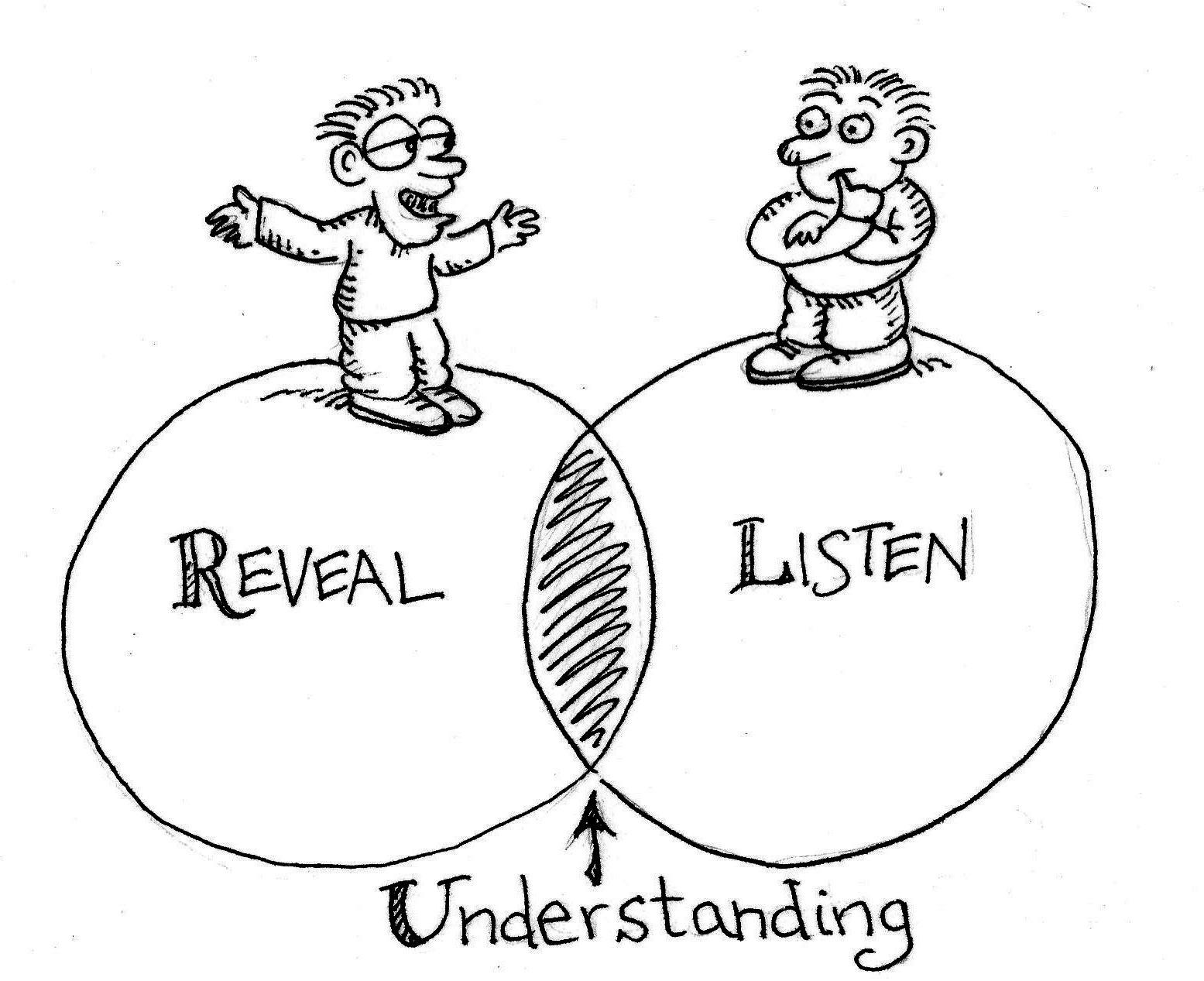
I think the answer lies in this beautiful picture.

Thursday, March 7, 2013

Did you lack anything?

We live in a culture that thrives on fear and the threat of scarcity.  From our early childhood, we are seduced by advertising and marketing to believe that we are lacking, that we do not have enough, that more is the answer to our restlessness.  Of course, we quickly forget the wisdom of Augustine: our hearts are restless until they rest in Thee.
I cannot say that I have every truly lacked anything.  Now, that is not to say that I have not wallowed in self-pity or the perception of lack.  But, in growing maturity, I can say truthfully that I have never lacked, never gone hungry, never been without provision of some kind.  Have I feared the lack?  Yes, and powerfully so.  Fear of scarcity is what compelled me to seek an education.  A false sense of pride in autonomy, independence, has only led to my own misery in several instances.  The truth is that we need each other, like it or not.  In the last few years I have known the fear of "what if" on many occasions.  I have known the fear of scrapping for money for the next meal.  I have known the fear of having no home and no way to provide safety for my family.  But, God has provided.  In fact, God has more than provided.  I have known some incredible, mind blowing acts of generosity over the last few years which has shattered my German sense of self reliance and pride.  This is the key to remembrance for me.
Our devotion asks that we remember the stories in our lives.  As Sue Monk Kidd advises, when our stories die, we can't remember who we are or why we are here.  Many people prefer to live in the rear-view mirror, especially in the church, in a most unhealthy way.  Many love to romanticize the good old days and conveniently gloss over the tougher times.  But true remembrance does not leave us stuck; it propels us forward in trust, in boldness with the assurance that scarcity will not prevail.  True remembrance reminds us of who we are, where we have been, and Who has been with us for each step.
I think one key to overcoming our fear of scarcity and the seduction of "more" is to live with a sense of gratitude.  That seems to be the goal of healthy remembering.  We all admit that we take so much for granted and we do.  We do not pause to remember that we have passed through many valleys and still stand strong this day.  Gratitude impels me from the pit of whatever present circumstances seem unsavory to a sense of liberation that has prevailed and is woven in my life.
I strive each day to "keep the picture frame small."  That is, I try not to worry about what is coming tomorrow or what has been yesterday.  The general sense of provision and liberation in my story of walking with God is enough to sustain me, to evoke gratitude, and to allow me to be present for what must be done (chores) along with what I want to do (play).  The blissful balance between these two overrides the fear of scarcity.

Wednesday, March 6, 2013

What do you want me to do for you?

Gee, what a question.  Again, I suspect the answer we give is very important.  I prefer the context given in the gospel of Mark.  James and John are asked this question and they brazenly tell Jesus, "we want you to do what we tell you to do."  Ultimately, they are planning their celestial 401K; they want the best seats in the house.  Immediately following this episode, the blind man (notice the irony here) begs "along the Way" and only asks for his sight. And, in the asking it is granted.
If I had to answer this question, it would be with the above words: open my eyes, I want to see your glory, and open my heart, I want to be closer to you.  I think that sums up the very essence of being in general.  Sure, we can tailor our lives in a million different ways; we can base our lives on power, prestige, ambition, success, worldly goods.  But, at the end of the day, if I am blind to what really matters and deaf to the still small voice in my being, then what good is it all?  
I find it interesting that the crowd tries to shush the blind man (Bartimeus in Mark's text).  How often does the crowd try to shush us in our effort to go God's way and not our own?  Did the crowd fear that they would miss something, that those in need would steal from their precious time or schedule?  Do I amble through life trying to make sure I get my fill?  Do I clamor to be in the front row though I can see aptly from the last?
When I hear Jesus ask me "what do you want me to do for you" I can think of no immediate answer other than sight.  Even that is a stretch.  My truest response is "it is done, Lord, how good it is to be here."  Yet, how often in my prayer life have I acted as the stage manager for God?  "Go this way, Lord, please.  No, not THAT way, this way, my way..."
To be free of wants, expectations, opens me to the horizon of what is.  When I stop giving stage directions, I can find peace in not needing God to do something for me.  Yes, I need God all the time.  But, to do, I'm not sure that is necessary.  Paraphrasing and adapting the old quote, "ask now what God can do for you, ask what you might do for God."
Bartimeus the blind man had positive expectations and those enlivened a faith which made him whole and able to follow Jesus in "the Way."  What expectations do I have this day?  Do they lead to wholeness or to decay?  Am I plodding along "the Way" or still taking the back roads and detours?  Glory lies all around us:  taste and see that the Lord is good.

Tuesday, March 5, 2013

Will you lay down your life for me?


We want to immediately answer this question as "yes, Lord, of course."  Peter cavalierly exclaims that he is able.  We often do the same, but I am not sure we understand any more than Peter did what it means to pick up our cross and follow Jesus.  Of course, Peter's brazen claims were deflated when he denied even knowing Jesus not once but three times.
The simple mystical truth is that we cannot be a loving person and still want our way.  We cannot lay down our wants, desires, expectations, thoughts, and ambitions without a humble, sacrificing love.  The only glimpse I have of this reality comes in being a parent:  understanding the depths to which I would go to protect my child, protect my family.  
It is not an easy concept to wrap into words.  And, the closest scriptural warrant seems to lie with the notion of self-emptying (kenosis).  In this self-emptying we find surrender and new life.  We are no longer imprisoned by our clutches on this world or its grasp of us.  We no longer quake in the face of death.  We know being in a purposed yet free way.
As many well known theologians have suggested, there is an Eternal Now to be discovered in emptiness.  Yet, we rage against the dying of the light and we avoid this emptiness at all costs.  We are burdened by the disease of "more" and we chase after creature comforts as if they will somehow one day satisfy us.  We are gorged on our own self and its importance.  Will you lay down your life for me?  It is a question that causes us to swallow hard, breathe deeply, and take stock of where our real treasures lie.  
There are surely those who can answer this question easily.  I am not one of them.  I am stupefied by the Cross.  I find it hard to sing the hymn, "in the Cross of Christ I glory."  I can feel the truth embedded there; but I wrestle with it and cannot find an array of words to do it justice.  I truly grieve how we have made the Cross into a trinket so often.  I grieve the star studded array of Cross laden accessories in our culture.  I rail against the ease with which we toss this symbol around as if we had mastered its profound implications.  I have no answers, only deep groans and sighs in prayer.

Monday, March 4, 2013

Why do you not DO what I tell you?

I'm realizing that many of the questions that Jesus asked have a definite tone of frustration:  "Why do you not...How much longer...do you not understand?" As a mother it reminds me of how often I grill my seven year old, "why did you do....?"  In seeking to answer this question asked by Jesus, I am reminded of Paul who says, "I do not understand what I do.  For what I want to do I do not do, but I do the very thing I hate."  I think we can all resonate with this sentiment.  
This is one of those "loaded questions."  Most good teachers know how to ask them.  It allows the hearer to answer the question from within their resources while glimpsing some uncomfortable truths as well.  What I hear in this question touches on identity.  Shakespeare said that all of the world is a stage.  So, are we nothing more than period actors in any given situation?  Are there actually many different personas that we project given our surroundings?  Is there any sense of integrity between who we are in public and who we are in private?
The charge leveled against modern believers is that we are nothing more than hypocrites: acting holier than thou on Sunday and acting like everyone else (or worse) during the week.  I suspect that Jesus had more than a fair glimpse of this in the temple hierarchy.  But, it was even more painful when his own disciples showed their intemperate attitudes on a regular basis.  Do we fall victim to the notion that there is a Sunday/Sabbath self and a real self at home.  And, that such a dichotomy is acceptable?  Is our sense of self grounded on rock, or with the changing sands of time?  Will I merely answer this question in the way that I think will be pleasing and profitable?
I think Lent is the perfect time to hone who we are, who we want to be, and to make sure it matches our actions.  Do we "do" what God has asked us to do?  Are we willing to deepen our life of discipleship or do we dismiss this question as too high in expectations?  Do we nod yes, and then go about our business as if it had never happened?
I think we must forever attune ourselves to the reality that the normal flow of this world will not support authenticity.  We are manipulated by media, power, prestige, etc.  Before we know it, we are bending to some will which is not our own and which is not God's either.  Lent is the time we get to know that raw, wounded space, that vulnerable place in all of us, and let that space be honored as holy and ripe for transformation.
Where do our priorities lie this day?  How might we intentionally create more authentic space in our being and in our actions?  What, or who is Lord of my life?

Saturday, March 2, 2013

You do NOT UNDERSTAND these things?

I sort of like Nicodemus' question about being born again: "how can this be?"  Sounds very much like the question asked by Zechariah, Mary, and Sarah when surprised by divine revelation.  Nicodemus was invited to a life of significance away from perfect law keeping.  Nicodemus knew a lot about God, but didn't know who God was or is.  Would he or could he step away from the bounds of the law to find God and grace?
Like Nicodemus, we often prize ourselves in knowing a lot about faith, church history, creeds, doctrines, Lutherans, rituals, etc.  But, do we really know God?  When I hear John 3:16 there seems to be a welcoming embrace of anyone who would as much as lean God's way (believe) to be accepted, loved and welcomed.  Yet, we take such moments of scripture and turn them into law:  here is what you must do, must know, must profess, dress like, participate in, and behave like in order to be allowed into membership in our group.  If you meet these qualifications we may consider you.
How do we keep it real?  How do we avoid the legalistic trap?  Why do we find comfort in our gold star standards while missing everything that Jesus taught and showed in his life?  Why do we make it so complicated to follow Him?  Where is our discipleship?  Where have we picked up the cross to follow?
If I had to fill in the blanks in Nicodemus' life, from his nighttime excursion to see Jesus to his showing up at the foot of the cross, I would say that Nicodemus likely had some gut wrenching moments of wrestling with what he had heard and what he was coming to understand.  I'm sure there were moments of rejecting and wanting to stay with what he was comfortable with, what he knew well, while also being intrigued, drawn, perplexed, and finally convinced of the realness of his encounter with Jesus.  I suspect Nicodemus tasted freedom and grace and found it quite appealing.
Can I be as brave as Nicodemus?  Am I willing to give up the same old thinking, the same old results, to open myself to something bigger, less controllable, less definable, and more real?  Even more important, is our church willing to die the necessary deaths to be revived and resurrected in new ways?
From the dark of night, a secret encounter with Jesus, to standing at the foot of the Cross:  what a journey!  Could I, could you do the same?

Friday, March 1, 2013

Did I not tell you that you will SEE the glory of God?

This question reminds me of the Simon and Garfunkel song (The Boxer) lyrics: still a man hears what he wants to hear and disregards the rest. I think the same holds true for our vision.  We see what we want to see.  Again this is tied to our interpretations and the prominence that we give to ourselves in this universe.  I am forever amazed by those who interpret things, people, so negatively.  Many string together imagined slights, deliberate offenses where in actuality human frailty is at play.  If I speak to someone and they don't speak back could it be that their ears may be stopped up?
I like the devotional story of Bach's signature on his great musical pieces: Soli Deo Gloria=Glory to God alone.  I am reminded of a conversation that Bishop Rinehart asked this week on the ELCA Clergy Facebook page:  "in your opinion, what gods do we worship most in American culture?"  Answers included:  the gods of our own making=my way, my body, my, my, my; money, food, individualism, sports, heroes, violence, television, pride, numbers, entertainment, success, happiness, comfort, sex, intellect, Prada, Coach, Disney and HDTV.  As you might imagine, the list was quite long.  Some followed Martin Luther's prescription that our gods are those things or persons in whom we put our trust, above all else.
Do we have the patience to trust in mystery, to trust in God?  I very much agree with the devotional transforming thought for today:  I would rather live in a world of mystery than in a world so small my mind could comprehend it.
I have always liked St. Irenaeus' wisdom and find it a worthwhile principle to live by.  What does it mean for me to be fully alive, living the abundant life that Jesus spoke of so often?  The beauty of life is that God has shared glory lavishly.  I see it in others, in the dappled wonder of nature, even in crevices and rough-hewn surfaces.  If I attune my heart properly, my eyes and ears perceive the glory of God in all things.  I am no longer limited to what I want to hear or see; there is manifestation, awe, wonder, shock, and surprise.